How To Survive A Loveless Sexless Marriage
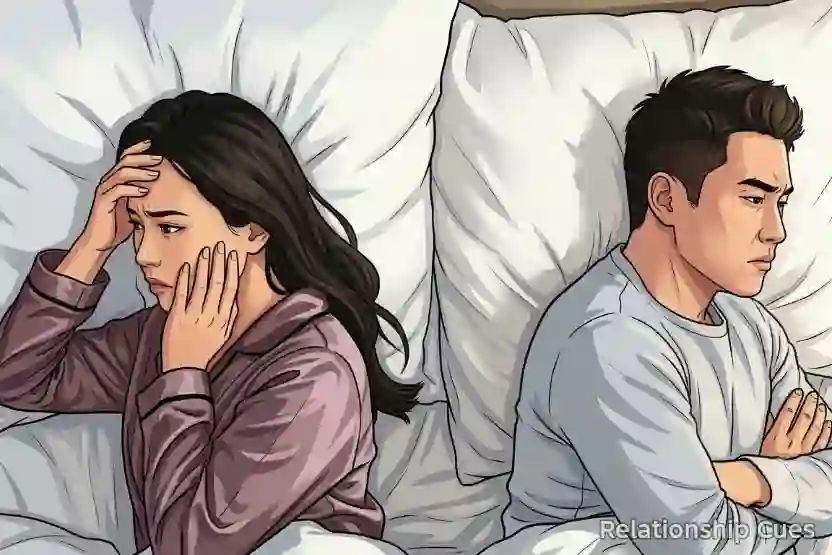
- How a loveless sexless marriage forms without a decision
- Rule out the causes that have nothing to do with love
- “I miss us” lands better than “we never have sex”
- How long is long enough to keep trying?
- Looking after yourself while the answer stays open
- Staying costs one thing, leaving costs another
- Questions people ask when they are deciding
- Is it normal to lose desire for a spouse after years together?
- How long can a marriage without intimacy last?
- Can a loveless sexless marriage be saved?
Loveless Sexless Marriage: How to Survive and Decide
Two people fold a fitted sheet on a Saturday, each holding two corners. For ten seconds they stand closer than they have all week. Then the sheet is a square, they step apart, and neither mentions it.
Surviving a loveless sexless marriage means doing two things at once: protecting your own health and self-respect today, and finding out whether the distance can change. Name the problem to your partner once, plainly. Rule out physical and mental health causes. Then give the marriage a defined stretch of real effort before deciding.

How a loveless sexless marriage forms without a decision
Almost nobody agrees to this arrangement. It builds out of small moments: a hand on a back that got a stiff reaction, an invitation declined for good reasons, a night when one person was too tired and the other too hurt to ask again. Each one is minor. Together they teach both people to stop trying.
Couples therapists often describe a loop called the pursuer-distancer pattern. One partner reaches for closeness, the other pulls back to get some room, and the pulling back makes the first person reach harder. Eventually the reacher stops, to avoid another small rejection, and the other reads that silence as relief. Now both are protecting themselves, and each believes the other has stopped caring.
That is the misreading worth catching early. From the outside, emotional distance looks like indifference. From the inside, it usually feels like self-protection. Neither one tells you there is someone else, and neither one tells you the love is gone. Often it means closeness has started to feel risky for both people, and each is waiting for the other to be brave first.
Rule out the causes that have nothing to do with love
Before reading the silence as a verdict on the marriage, check what else could be pulling desire down. Low desire is a common effect of things that are treatable, and it gets blamed on the relationship because that is the easiest place to point.
- Medications, hormonal shifts, chronic pain, poor sleep and illness, any of which can flatten desire or make sex uncomfortable
- Depression, anxiety or burnout, which tend to dull interest in almost everything, touch included
- Exhaustion from caring for children, parents or a demanding job, when the body is simply out of reserves
- Resentment stored up over years, especially about unequal workloads or old arguments that never finished
- Shame about bodily changes, or a past experience that makes intimacy feel unsafe
A different idea changes how many couples read each other. Some people have responsive desire, which means wanting sex arrives after warmth and touch have started, not before. If one partner waits to feel the urge and the other waits to be invited, nothing ever begins.
Seeing a doctor is a fair first step for whoever has the lower desire. It lands better framed as “let’s find out what’s going on” than as “something is wrong with you,” and it works just as well for a marriage without intimacy that has run for years as for one that started drifting last spring.
“I miss us” lands better than “we never have sex”
Most people living in a loveless sexless marriage have never said the situation out loud. They have hinted, sighed, left articles open on a shared laptop, or raised it in the middle of an argument, which is the worst time. A partner who hears the subject only as an accusation will defend, and defending ends the conversation.
Pick a neutral moment, not the bedroom and not a fight. A drive, a long walk or a big errand works well, because side-by-side talk feels safer than face-to-face. Then say something close to this:
“I’ve been feeling far from you lately, and I miss us. I’m not here to blame anyone. I’d like to figure out what happened to both of us and what we can do about it.”
What comes back usually falls into one of three kinds. Some partners get defensive, which often means they have been feeling like a failure for a while. Some go quiet, which often means they are afraid of saying the wrong thing. Some are relieved, because they have wanted to say it too.
If the answer is defensiveness, try: “I’m not asking you to fix it tonight. I just didn’t want to keep pretending it wasn’t there.” Then listen for willingness rather than promises, meaning whether the other person can be curious about the problem with you, even awkwardly.
How long is long enough to keep trying?
“Someday we’ll fix this” is how many marriages end up here in the first place. A better approach is a defined stretch of specific effort, followed by a review. Three to six months is a reasonable window: long enough for a medical check, a few honest conversations and a real attempt at counseling, short enough that hope does not turn into waiting.
Real effort has parts you can see. Both people go to the appointments. Both try low-pressure touch that does not have to lead anywhere, like a long hug or a hand on the shoulder during a show. A couples therapist or sex therapist can help, since a neutral third person can interrupt the pursuer-distancer loop.
Then use a simple decision rule when the window ends:
- If one of you is still trying and the other refuses to talk, see a professional or try anything at all, the problem is no longer desire. It is willingness, and that tells you something about the marriage.
- If both of you are trying and things are slowly warming, extend the window and keep going.
- If both of you tried honestly and nothing moved, the answer is sad but clear, and it is easier to live with than a question left open for years.
One exception matters. If the coldness comes with contempt, put-downs, control or fear, joint counseling is usually not the right first step, and advice to try harder does not apply. Talk to a trusted friend or a professional on your own first, and put your safety ahead of the marriage.
Looking after yourself while the answer stays open
Years of being unwanted do something specific to self-image. When a partner pulls away without explaining, most people fill the gap with the one explanation they feel able to control: something is wrong with me. That story feels like insight and is usually just a guess. A body that goes untouched long enough starts to forget what it is allowed to want.
A few habits protect you in the meantime:
- Get touch from safe sources, such as close friends, family, a pet, a dance class or a massage, without treating any of it as a replacement for your partner
- Keep friendships and your own interests alive, because one marriage cannot be the only source of warmth in a life
- Write down what you want for yourself, separate from what you want from your partner
- Catch the small sarcastic digs when they happen, since contempt makes an already tender subject harder to raise for both of you
Some people in this spot drift toward an affair or an intense attachment elsewhere. The pull is understandable, because the need is real, but secrecy adds a second wound and makes the first one harder to say out loud. If the need has grown too big to ignore, the honest options tend to hold up better: say it, renegotiate the marriage openly, or separate.
If the heaviness spreads into everything, with poor sleep, little appetite and no pleasure in things you used to like, that deserves its own help from a doctor or counselor, whatever happens with the marriage.
Staying costs one thing, leaving costs another
Nobody gets the option with no price. Staying costs ongoing loneliness inside the marriage, the effort of pretending in front of other people, and the slow risk of believing you are unlovable. It also keeps things many people value and have every right to value: a shared home, money that stretches further with two incomes, children in one household, a long history, and affection that survives without passion.
Staying in a loveless sexless marriage is a legitimate choice when it really is a choice, made with open eyes and terms both people understand. It is much harder when it happens by default, one postponed conversation at a time.
Leaving costs grief, money, logistics and sometimes the approval of people who liked the marriage more than you did. It also carries a risk that rarely gets said aloud: the patterns that built the distance tend to travel. If the avoiding and withdrawing were never understood, they can turn up again in the next relationship, so leaving works best alongside learning what happened in this one.
Pick the cost you can live with, then give it a date. Write down a day three months from now, book one appointment this week, whether that is a doctor, a counselor or a lawyer, and tell one trusted person where you stand. A decision with a date and a witness is much harder to let slide.
Questions people ask when they are deciding
Is it normal to lose desire for a spouse after years together?
Yes, desire often fades with routine, stress and life changes, which makes it common in long marriages. What matters is whether the fade gets talked about or hidden. Desire usually needs rest, novelty and emotional safety, and couples who protect time together and say what they want tend to rebuild it.
How long can a marriage without intimacy last?
It can last for decades, but length is not the same as health. Some couples live for years as close friends and feel content with it. When one person is hurting and has stopped being heard, the marriage tends to wear that person down. The better measure is whether both people chose it.
Can a loveless sexless marriage be saved?
Yes, many can, but it depends on whether both people are willing to look at the problem. Recovery usually starts with ruling out health causes, then honest conversation and, often, couples or sex therapy. Warmth tends to return in small steps, such as touch without pressure and time together that is not about logistics.