Palm Scratch Meaning: What His Fingers Are Really Saying
- Where the secret handshake signal came from
- Why not just say it out loud?
- The palm scratch meaning when it happens once
- Flirting, habit or boundary test: how to tell
- Same touch, different rooms
- Words you can actually use
- “It was only a joke” doesn’t settle it
- Frequently Asked Questions
- Does scratching a palm during a handshake always mean he wants to sleep with you?
- What does it mean when a woman scratches a man’s palm?
- What should I do if a man scratches my palm at work?
Palm Scratch Meaning: What His Fingers Are Really Saying
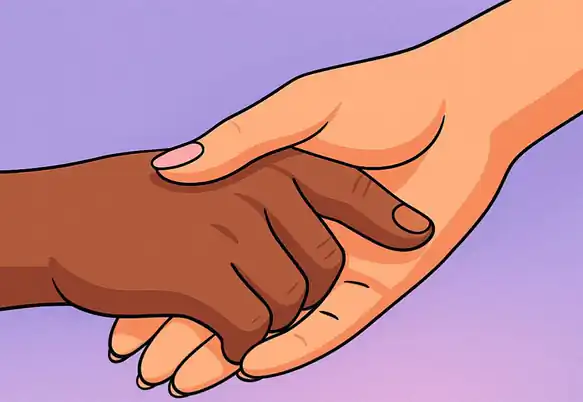
At a wedding-week dinner, a stranger shakes your hand, and as he lets go, one fingertip drags slowly across your palm. It lasts under a second. Your body registers it before your manners do, and the next thought arrives fast: did he just mean something by that?
In popular body-language folklore, the palm scratch meaning is a private signal of sexual interest, a way of saying “I’m attracted to you” without words. There is no research behind it, though. A single brush can also be nerves or clumsiness, so the repeat, the eye contact and your own comfort matter more.
Where the secret handshake signal came from
There is no solid study or clear origin behind this one. It travels through advice columns, forums and word of mouth, always with the same claim: a fingertip dragged across the palm during a handshake is a covert invitation.
It stuck because a handshake is one of the few touches strangers are allowed to share, so anything unusual inside it stands out. The palm is also sensitive skin, so a light drag registers far more sharply than a firm squeeze. That sensation is a big reason the moment stays in your memory afterward.
So the signal is real in one sense: people do read it, and some people do send it. What it lacks is a fixed dictionary. The same touch can come from someone flirting, someone nervous and someone who simply has a restless hand.
Why not just say it out loud?
Because words carry a risk and a touch carries almost none. When a man scratches your palm instead of saying “I’d like to get to know you,” he gets to test your reaction while keeping plausible deniability, which means he can claim later that nothing meant anything. If you smile back, he has his answer. If you pull away, he can act as though it never happened.
That is the psychology under the gesture: fear of rejection wearing the costume of confidence. People who feel sure of their welcome often just speak. People who feel unsure send something ambiguous and watch your face for what comes back. It also explains where these moments happen, in crowded rooms, work events and family gatherings, where a direct line would feel too exposed.
The cost of this style lands on the receiver. You are handed the job of interpreting, and there is no clean way to say no without making the moment awkward. Someone who is genuinely interested and willing to be clear will usually find a way to say so plainly once the chance comes.
The palm scratch meaning when it happens once
A single scratch is weak evidence, and most misreading starts right here. Handshakes are quick, and plenty of ordinary things can drag a finger across skin: a nervous grip, a ring catching, a calloused hand, a jostling crowd, or a person who fidgets whenever they meet someone new.
The better question is what surrounded the touch. Look at the seconds before and after, not the fingertip alone. Signs that point toward interest usually arrive in a cluster:
- He holds eye contact a beat longer than the greeting needs.
- The handshake lingers after the words have ended.
- He finds a reason to stand near you afterward.
- His tone softens or slows when he talks to you.
- The touch happens again without the situation forcing it.
When none of those are present, the fair reading is that you cannot tell, and “cannot tell” is an honest answer. Treating a one-second touch as a message with no clues is how people end up replaying it for a week.
Flirting, habit or boundary test: how to tell
Three different things look identical in the first second and separate over the next few minutes.
If he is flirting, his attention stays on you after the touch. He asks follow-up questions, remembers what you said and keeps finding his way back to your side of the room. Interest that survives an ordinary conversation is hard to fake.
Habit looks different, because it shows up with everyone. Some people have a signature move they use in every greeting, and a few use it as a tactic to see who responds. Watch how he greets other people. If three of them in a row get the same fingertip, the gesture says more about his style than about you.
The third case matters most. Someone who repeats the touch after you pulled your hand back, or after you were clearly cool toward him, is no longer sending a signal. He is checking how much you will allow. A useful decision rule: if it happens again after you have shown discomfort, treat it as a choice he made.
Same touch, different rooms
The palm scratch meaning shifts with the setting. At a party where you have been flirting with someone for an hour, a fingertip across your palm lands as playful, because everything around it already points the same way. From a stranger in a reception line, or a contact at a conference, it has nothing to attach to, and that gap makes it more likely to be careless or calculated than romantic.
How well you know him matters too. Between two people who already share a spark, the touch is one more line in the conversation. Between near strangers, it skips every step that normally builds comfort, which is why it can feel presumptuous even when it was meant kindly.
One honest limit on all of this: handshake length, eye contact and touch norms differ between families, regions and workplaces. A person raised around warmer, longer greetings may mean nothing at all by contact that feels intimate to you. Use the pattern, the setting and your own reaction together, and trust none of them alone.
Words you can actually use
You do not owe anyone an interpretation. You get to pick the response that matches how you feel, and each one has a cost worth knowing.
If you are interested, answer with warmth and eye contact, then add words so the signal is not left to guesswork: “Good to meet you. Are you around tomorrow too?” That accepts the invitation and gives him something concrete to respond to. The cost is that you have now said yes, so be ready for him to act on it.
If you are not interested, take your hand back at a normal pace and keep your tone friendly but flat. If he continues, say it plainly: “I’d rather keep it to a normal handshake.” The price is a few seconds of awkwardness, which is small next to weeks of being read as a maybe.
If you are unsure, ask lightly: “Sorry, did you mean something by that?” It sounds bold, but it moves him from deniability to honesty. If he laughs and says “no, nothing,” you have lost nothing. If he answers directly, you know where you stand.
Ignoring it is the lowest-conflict option, and it works fine for a one-off. Just know that silence can be read as neutral rather than as no.
“It was only a joke” doesn’t settle it
Sometimes the touch is not flirting at all, and the setting makes it heavier than it looks. If it comes from a boss, a client, a landlord or anyone with power over your work or housing, the palm scratch meaning matters less than the fact that you are uncomfortable. Unwelcome touch is unwelcome whatever he intended, and a shrug, a laugh or “I was just being friendly” does not change how it landed.
You do not have to prove he meant it before you are allowed to object. A short, direct sentence is enough, and so is stepping back and ending the conversation. If it repeats, write down the date and what happened, and tell someone you trust or the person at work who handles complaints. Patterns are easier to act on when they are on paper.
Interest that respects your answer looks one way. Interest that keeps going after your answer looks another, and the second one deserves to be taken seriously.
Frequently Asked Questions
Does scratching a palm during a handshake always mean he wants to sleep with you?
No, it does not. The idea comes from folklore, and there is no solid evidence that the gesture carries one fixed meaning. It can come from attraction, nervousness, habit or accident, so look at eye contact, lingering and repetition before you decide what it meant.
What does it mean when a woman scratches a man’s palm?
Folklore treats it the same way, as a possible sign of interest, and it carries the same uncertainty. Held eye contact, a lingering grip and a warm smile make that reading more likely. On its own, a single touch is too vague to rely on, whoever sends it.
What should I do if a man scratches my palm at work?
Pull your hand back and keep the conversation professional. If it happens again, say plainly that you want a normal handshake. Write down the dates, and speak to a manager or HR if it continues. Unwelcome touch at work is a valid concern whatever he intended.