
When a Guy Rests His Hand on Your Leg While Driving?
- Why a car makes this kind of touch so easy
- Four meanings, and how to tell them apart
- What a hand on your leg while driving means at each stage
- If you like it, tell him in a small way
- “I’d rather you keep both hands on the wheel”
- When the car itself becomes the problem
- Frequently Asked Questions
- Does a guy putting his hand on your thigh while driving mean he likes you?
- Is it rude to move his hand away?
- Why does he only do it when we’re alone in the car?
- Why did he stop putting his hand on my leg while driving?
Hand on Your Leg While Driving: What It Usually Means
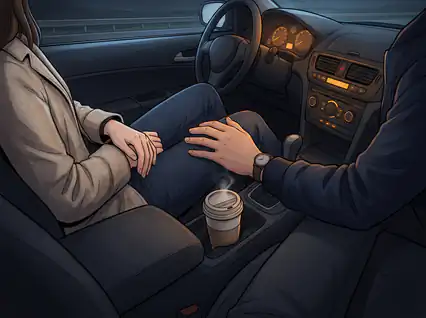
The hand on your leg while driving usually arrives without announcement, somewhere between the second red light and the highway ramp. Neither of you says anything, and both of you keep your eyes on the road.
A hand resting there is usually a way of staying connected without needing words. Depending on the history between you two, it can mean affection, a test of whether you welcome touch, a claim of closeness, or plain habit. The context and your own comfort decide which.
Why a car makes this kind of touch so easy
Side-by-side seating does most of the work. Nobody has to hold eye contact, and the road gives both people a reason to look straight ahead. Feelings that would feel heavy across a table become easier to act on when two faces point the same direction, which is part of why car conversations so often turn honest.
The gesture itself is a deniable touch, meaning one that can be waved off as nothing if it lands badly. That makes it far less risky than a kiss or a direct “I like you.” People who dread rejection often pick the move they can retreat from, and a free hand on an open road is the easiest move available.
So a hand on your leg while driving can feel natural even between two people who haven’t said how they feel. The trade-off is that a low-risk signal is also an easy one to misread. Some people take it as a promise, others as pressure, and often it is neither.
Four meanings, and how to tell them apart
Affection is the simplest reading and the most common. He feels at ease around you and wants a point of contact, the way someone reaches for a hand on a walk. The touch is usually light, stays in one place and doesn’t change when the conversation does. Sometimes it is reassurance instead: a passenger who dislikes highways may get a steady hand on the knee because the driver noticed.
A test of the water is the early-days version. He rests his hand, then watches what you do: lean in, go still or shift away. The meaning sits in your reaction. If the hand stays where it landed, he is most likely asking. If it keeps traveling, he has stopped asking and started assuming.
Claiming is rarer and worth knowing about. Some people use touch to mark closeness, especially when they feel unsure of where they stand. It may show up when another person is mentioned or when others can see into the car, and the grip may tighten slightly. Insecurity usually sits behind it, and it deserves attention only if it comes with other attempts to keep track of you.
Habit is the long-relationship version. After years in the same passenger seat, a hand on the knee can carry no message at all. Habit isn’t a lack of feeling, only feeling that no longer needs to announce itself.
A common misreading is that any hand on the leg means he wants more than that. More often it means he wants to feel close, and what he wants after that is a separate question he hasn’t answered yet.
What a hand on your leg while driving means at each stage
Timing changes the reading more than the touch does. On a first or second date, it is almost always forward and a little brave, and the sensible way to take it is as interest plus a question. A few weeks in, it more often means he is relaxed and wants to stay physically close. After several years together, treat it as comfort unless something else has changed.
A simple decision rule helps. Give it about a minute and watch two things: whether the hand responds to you, and whether it suits the moment. A hand that eases when you shift, or lifts when you cross your legs, belongs to someone paying attention. A hand that presses, slides or stays put after you have moved is paying attention to something else.
A mismatch between stage and touch is information too. A near stranger who goes straight for the thigh, or a long-term partner who suddenly starts doing it after months without, is worth a closer look at what has changed around the gesture.
Habits also differ from home to home. Some families treat casual touch as ordinary and warm, while others keep it for private spaces, so two people can read the same gesture in opposite ways. If you can’t tell which meaning applies, ask lightly. “Is that a hello or a question?” said with a smile gets an honest answer more often than a long silence.
If you like it, tell him in a small way
Welcome touch often goes unanswered because both people are being careful. The easiest reply is physical: rest your hand over his for a moment, or turn slightly toward him. That tells him his question had a yes in it, and the moment can grow without anyone making a speech.
Words work too, and they can be small. “That’s nice” is enough. Someone who has been testing the water usually relaxes the second he hears it, and the rest of the drive gets easier for both of you.
If you like the touch but aren’t sure about him, you can enjoy the moment and still set the pace. Liking a gesture and being ready for whatever might follow are separate decisions. A line like “I like this, and I want to keep things easy for now” gives him honest information without closing anything down.
“I’d rather you keep both hands on the wheel”
If the touch makes you tense, the clearest reply is a calm, ordinary sentence in a normal voice. Try “I’d rather you keep both hands on the wheel.” Or something lighter: “Not yet, okay? Ask me again later.” The first sets the limit plainly, and the second leaves a door open if you want one. If words feel impossible in the moment, you can lift his hand yourself and set it back on the wheel, with a smile if the mood allows.
Say it once, then watch the next few minutes. A considerate person moves the hand, may apologize, and the drive carries on. A bit of embarrassment is normal and can look like a joke or a short silence. What matters is whether the limit holds.
How he treats your first “not yet” tells you more about him than the touch ever did.
This applies even to a hand on your leg while driving that felt fine last week and doesn’t today. Comfort changes with mood, with stress and with the road, and you are allowed to change your answer.
When the car itself becomes the problem
Most hands on most legs are harmless. The exception is when you have said no and the touch continues, or when your no is answered with teasing or a comment that you are being dramatic. A moving car is different from a living room: you can’t stand up and leave, and the driver controls the speed, the route and when the trip ends.
Many people go quiet in that spot because leaving isn’t possible yet, which means silence tells him very little about whether you are comfortable. If he reads your quiet as a yes, the mistake is his.
If you say no and the hand comes back, or he sulks, treat that as real information about how he handles limits. For the next ride, arrange your own way home, share your location with a friend, or meet somewhere you can leave on your own. If a moment already felt frightening, a trusted friend or a counselor is a good person to talk it through with.
A hand on your leg while driving can start a warm evening or end one, and the difference is almost always how he responds once you answer.
Frequently Asked Questions
Does a guy putting his hand on your thigh while driving mean he likes you?
Usually it means he feels at ease with you and wants closeness, though the strength of that feeling depends on the stage you’re at. On an early date it points to interest, and in a long relationship it can be habit. Look at how he responds when you react, since that tells you more than the touch.
Is it rude to move his hand away?
No, moving his hand is a normal and reasonable response when the touch isn’t welcome. Do it calmly, ideally with a short sentence like “Not right now.” A considerate person will take the hint without drama, and how he reacts is useful information about how he treats your boundaries.
Why does he only do it when we’re alone in the car?
Privacy usually explains it. A car is one of the few places where two people can be close without an audience, so touch feels safer there. Some people also save affection for private moments because they’re shy about showing it in public. If it bothers you, say you’d like the same warmth around other people too.
Why did he stop putting his hand on my leg while driving?
A change usually reflects mood, stress or routine more than lost interest, though it deserves a calm conversation if it comes with other distance. People often stop small gestures when they’re tired or preoccupied. Ask something like “I miss the hand on the knee thing, is everything okay?” and listen to the reply.