What Does It Mean When a Guy Gives You Hickies?
- Why a bruise ends up carrying so much meaning
- What a hickey means in the first month versus a long relationship
- One mark, two very different evenings
- Three readings that go wrong
- Saying how you felt about it
- When the mark stops being flirtation
- Frequently Asked Questions
- How long does a hickey last?
- Is it okay to tell a guy you do not want hickeys?
- Are hickeys on the neck safe?
- What to watch over the next few days
What a Hickey Means From a Guy and How to Read the Signs
A faint purple mark sits just under your jaw, and now you are digging through a drawer for a scarf in warm weather, wondering what it was meant to say.
Most of the time, what a hickey means is physical attraction and a moment with no brakes on. Between two people who are dating, it is usually passion or play. The meaning changes with timing, your consent, and what he does afterward, so the mark itself tells you less than his behavior around it.
Why a bruise ends up carrying so much meaning
A hickey, or love bite as it is called in the UK and Australia, is a small bruise. Suction makes tiny blood vessels near the surface of the skin leak, and the blood pools underneath. Nothing is written in that bruise. Whatever it says comes from the person who made it, and people make it for very different reasons.
In practice, what a hickey means tends to land in one of four places:
- Attraction with the brakes off, where he got caught up and did not think about tomorrow morning.
- Play, a shared joke between two people who are comfortable enough to be a little silly.
- A souvenir, a trace of the night, the way some people keep a ticket stub.
- A claim, a wish for other people to see that you are spoken for.
The last one has a psychological root worth understanding. People who feel unsure about where a relationship stands sometimes look for visible proof that it is real. A mark on a partner’s skin works as that proof, and it costs the person who leaves it nothing. The cost lands on you, in the meeting where you keep adjusting your collar or at the family dinner where someone asks.
The first three are far more common than the fourth. Common is not the same as certain, though, so the next sections are about telling them apart.
What a hickey means in the first month versus a long relationship
Early on, a hickey on the neck is a thin signal. It says he is attracted to you and was enthusiastic that night. It does not say he wants a relationship, because physical interest and long-term intent are two separate things, and some people feel the first without the second. If you are hoping the mark means he is serious, treat that as unconfirmed.
Better evidence shows up in ordinary behavior, and a simple decision rule helps. If he is still reliable two or three weeks later, making plans ahead of time, answering messages at a steady pace and including you in parts of his life, the mark was probably plain enthusiasm. If he turns vague the moment you mention next weekend, it was a moment and nothing more.
In a relationship of several months, the same mark usually reads differently. By then there is trust, and trust makes room for silliness. A hickey becomes a flirtation, sometimes a dare, sometimes a laugh during a weekend away when nobody has to be anywhere.
After years together, it is often nostalgia. Two people who have spent a decade splitting chores and school runs sometimes reach for a teenage gesture as a way of saying they still see each other as more than housemates. If a long-term partner gives you one out of nowhere, the likeliest message is that he misses the way things used to feel, and a warm response is usually welcome.
One mark, two very different evenings
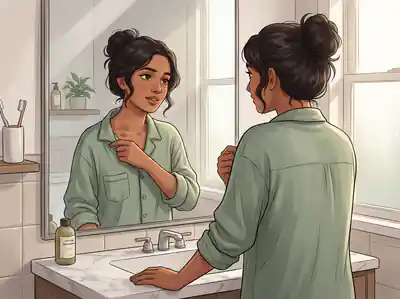
Take a couple a few months in, away for the weekend. One of them leaves a mark near the collarbone, they both laugh, and someone says, “Well, long sleeves tomorrow.” The next morning they check it in the bathroom mirror and laugh again. The mark came with a joke and a shared sense of how visible it would be.
Now take a third date. Earlier in the evening, the person said they would rather skip marks on the neck because of a meeting the next day. He leaves one anyway, high on the throat where no collar can cover it, and says, “Now everybody knows you’re taken.” The bruise is the same size as the one in the first story, but it is being used for something else. It followed a no, and what he said afterward matters more than the mark does.
Placement adds a clue but never settles the question. A spot that is easy to hide, like the collarbone or shoulder, tends to come from closeness and a little care. A spot that cannot be covered can lean toward wanting it seen. Lean is the key word, because some people just do not think about where, especially in the moment.
Three questions sort most situations. Did he check your reaction, or ask, before leaving it? Did he stop when you said stop? Does he treat the mark as something the two of you share, or as something he owns? If the first two answers are yes and the mark feels shared, read it as passion or play. If he ignored a no, that tells you how he treats your limits, whatever the bruise was meant to say.
Three readings that go wrong
A hickey does not mean he is in love. Strong feeling and strong desire can look alike in the moment, and a bruise cannot tell them apart. It also does not mean the two of you are now exclusive. Plenty of people assume a visible mark creates an agreement, when an agreement only exists if both people said it out loud.
The third misreading goes the other way: assuming that no hickey means no interest. Some people never leave marks because of work, habit or a dislike of them. A man who prefers not to can be just as invested as one who does. Judge interest by how he treats you across weeks, not by what shows up on your skin.
Pop culture feeds all three. Films and teen shows treat the hickey as a trophy or a statement, so adults sometimes carry old scripts into new relationships without noticing. Nobody agreed to those scripts, and what a hickey means to you is allowed to be different from what it meant in a movie.
Saying how you felt about it
Liking it is a fine reason to say so, and you can add a practical request in the same breath. Something like, “That was fun. Next time, somewhere I can cover.” It keeps the playfulness and sets a placement boundary without turning it into a rule.
When you are unsure, try, “I’m not sure how I feel about the mark. Can you ask me first next time?” That gives him a simple job to do, and it shows you how he handles a request.
If it was a no for you, plain words work best: “I’m not comfortable with marks where people can see them. Please don’t do that again.” No apology is needed, and no long explanation.
Then watch what comes back. A person who cares usually says sorry, asks what he got wrong, or at least says okay. Defensiveness is common too, because being told off, even gently, can sting. So give one chance. The first reaction might just be embarrassment. The second reaction, the next time you are together, shows character, because it shows whether he asked first.
His response to your boundary tells you more than the bruise ever could.
A reply like “it’s just a hickey, relax” is worth noticing. It says his comfort outranks yours, and that is a pattern, not a one-off.
When the mark stops being flirtation
Hickeys become a concern in a specific set of situations:
- Marks left after you said no.
- Marks placed where you cannot hide them, along with comments about who will see.
- Irritation or anger when you cover one.
- Marks that appear after you spend time with friends or coworkers, as if he is restating something.
- Pressure to leave them uncovered at family events or at work.
Control tends to grow through small, visible claims. A mark that is repeatedly used to display that your body belongs to him is part of a larger message about who gets to decide. Jealousy often sits underneath, and jealousy rarely settles by marking more.
This advice assumes you are free to say no without paying for it. If saying no brings anger, sulking or punishment, that deserves attention far beyond a hickey. Talk to a trusted friend, a family member or a counselor who can hear the whole picture, and take your own read of how you feel around him seriously.
Frequently Asked Questions
How long does a hickey last?
Most hickeys fade within a few days to about a week, shifting from red or purple to green or yellow as the body clears the pooled blood. Deeper ones can take longer. A cold compress on the first day may help limit the bruising, and gentle warmth afterward can speed the fade.
Is it okay to tell a guy you do not want hickeys?
Yes, and it is a normal thing to say at any stage of dating. One short, friendly sentence works well, such as “Not on my neck, please.” How he responds to the request tells you more than the request itself, so pay attention to whether he remembers it next time.
Are hickeys on the neck safe?
Usually yes, because they are ordinary bruises. Hard sucking on the sides of the neck is the main concern, with very rare reports of blood vessel injury, so lighter is safer. Mouth contact can also pass cold sores. Sudden weakness, trouble speaking or a severe headache afterward needs medical care right away.
What to watch over the next few days
Once the mark has faded, what a hickey means is mostly settled by what happened around it. Notice whether he checks in the next day, whether plans appear on the calendar, and whether he brings the mark up in a way that leaves you feeling respected rather than claimed.
For today, pick one sentence from the scripts above and decide whether you want to send it. If the answer is no because you liked the mark, that is a complete answer too.