What happens when spouses stop trying to connect daily
- 1. You Stop Arguing About the Things That Hurt
- 2. You Stop Making and Acknowledging Bids for Connection
- 3. You Stop Protecting Each Other in Public
- 4. You Stop Assuming Positive Intent
- 5. You Stop Creating a Shared Future
- The Bitter Truth You Need to Hear
- How to Break the Silence
- Frequently Asked Questions
- Can a marriage survive the roommate phase?
- What if I am the only one trying to fix things?
- How do I know when it is actually over?
If You and Your Husband Stop Doing These 5 Things, Your Marriage is Over
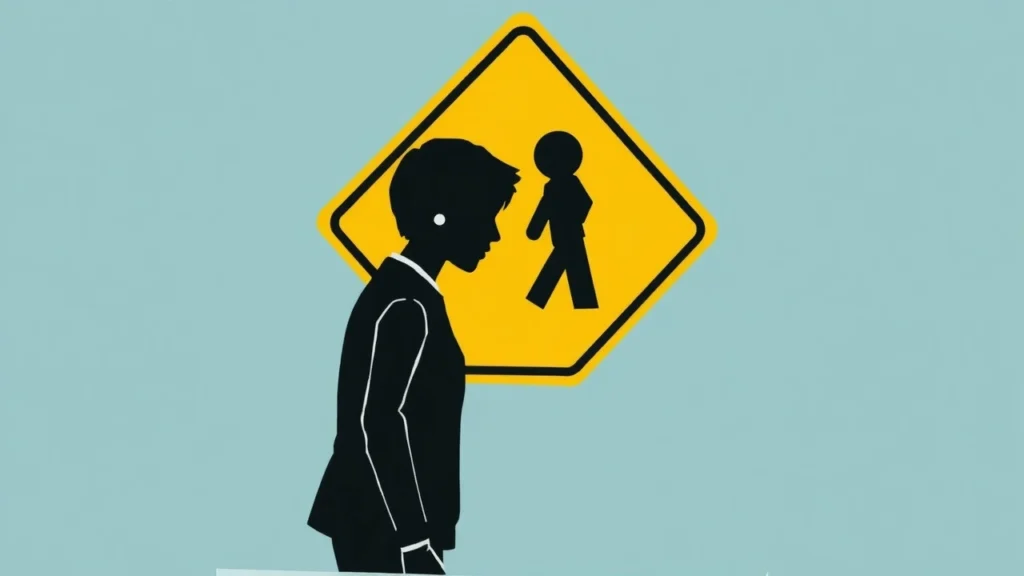
You wake up next to him, but he feels thousands of miles away. The house is quiet, the routines are functioning perfectly, and from the outside, everything looks fine.
But inside, you are suffocating in the silence. You pass each other in the kitchen, talk about the grocery list or the kids, and retreat to your separate corners of the house.
People assume that marriages end in screaming matches and thrown plates. They rarely do.
Most marriages end with a whisper. They die quietly when two people slowly stop engaging in the invisible habits that keep a relationship breathing.
1. You Stop Arguing About the Things That Hurt
Society tells us that a peaceful house is a happy house. As a behavioral strategist, I will tell you that a completely conflict-free marriage is often a dead one.
When you love someone, you fight for the relationship. You argue because you still believe the other person can hear you, understand you, and change their behavior.
When the arguing stops, it means emotional detachment has set in. You have both calculated that speaking up is no longer worth the energy, because you no longer expect things to improve.
Apathy is the true opposite of love, not anger. When you can watch your husband do the exact thing that used to break your heart, and you feel absolutely nothing, the foundation has already crumbled.
2. You Stop Making and Acknowledging Bids for Connection
In relationship psychology, an emotional bid is any attempt to get your partner’s attention, affection, or support. It can be as big as asking for a hug, or as small as sighing heavily after a long day.
Healthy couples turn toward these bids. They look up from their phones. They ask what the sigh meant.
When a marriage is dying, these bids are ignored or met with irritation. You send a funny text, and he leaves it on read. He complains about his boss, and you give a flat, one-word response.
This creates a pattern of micro-abandonments. Every ignored bid sends a subconscious signal to the brain that this person is no longer a safe place to land.
3. You Stop Protecting Each Other in Public
A marriage is a private alliance against the rest of the world. Even when you are furious with each other behind closed doors, you are supposed to be a united front in public.
When the marriage enters its final stages, this protective barrier evaporates. You start rolling your eyes when he speaks at dinner parties. He makes passive-aggressive jokes about your habits in front of his family.
This destroys the core of emotional safety. If you cannot trust your partner to have your back in a room full of strangers, the nervous system stays constantly on edge.
Once contempt replaces mutual respect, the relationship enters a terminal phase. Contempt is the toxic belief that your partner is beneath you, and it is almost impossible to reverse once it takes root.
4. You Stop Assuming Positive Intent
Think about the early days of your relationship. If he was late coming home, you worried he was in traffic. You gave him the benefit of the doubt.
When a marriage is breaking down, couples fall into negative sentiment override. This means your brain automatically filters every single action your partner takes through a negative lens.
If he buys flowers, you wonder what he did wrong. If you ask a simple question about the schedule, he accuses you of micromanaging him.
You stop seeing each other as flawed humans trying their best. Instead, you see each other as adversaries actively trying to make life miserable.
5. You Stop Creating a Shared Future
A relationship survives on the promise of tomorrow. It runs on the vacations you are planning, the home you want to build, and the shared vision of growing old together.
When the end is near, the future tense disappears from your vocabulary. You stop making plans that extend beyond the next weekend.
You start imagining a life without him. You quietly run the math on what rent would cost for a one-bedroom apartment, or how custody might work.
This is a dangerous form of cognitive dissonance, where your physical body is in the marriage, but your mental energy has already moved out.
The Bitter Truth You Need to Hear
Right now, you are probably reading this and mentally checking off all the things your husband is doing wrong. You are waiting for him to wake up, realize what he is losing, and fix the distance between you.
I need to tell you something you will not like. You are actively participating in this silent decay.
Distance is co-created. Every time you swallow your truth to avoid an argument, you vote for the distance. Every time you withhold affection because he hurt your feelings yesterday, you widen the gap.
You cannot complain about the coldness of a room if you are refusing to turn on the heater. Waiting for the other person to go first is how marriages bleed to death.
How to Break the Silence
If you want to know if this marriage can be saved, you have to run a brutal experiment. You have to drop your armor first.
Stop waiting for an apology. Walk into the room tonight, look him in the eye, and say, “I feel like we are miles apart right now, and I miss you.”
Do not accuse him. Do not bring up the past. Just make a massive, vulnerable bid for connection.
His reaction will tell you everything you need to know. If he softens and steps toward you, there is still blood pumping through the veins of this marriage. If he mocks you or walks away, you have your final answer.
Frequently Asked Questions
Can a marriage survive the roommate phase?
Yes, but only if both partners acknowledge they are in it. The roommate phase is normal during high-stress periods, like raising toddlers or career shifts. It only becomes fatal when you accept it as your permanent reality.
What if I am the only one trying to fix things?
One person cannot sustain a two-person dynamic. If you are doing all the reading, all the therapy, and making all the bids for connection, you are not in a marriage. You are managing a dependent.
How do I know when it is actually over?
It is over when the thought of leaving brings you relief rather than fear. When you look at your partner’s pain and feel total indifference, the emotional bond has fully severed.



Leave a Reply