How to show respect to your husband by stopping this
- Why Control Feels Like Love (But Translates as Disrespect)
- 1. Answering Questions Addressed to Him
- 2. Redoing His Household Chores
- 3. Offering Unsolicited Advice on His Problems
- 4. Venting About His Flaws to My Friends
- 5. Interrupting His Train of Thought
- The Bitter Truth You Need to Hear
- 6. Questioning His Daily Decisions
- 7. Treating Him Like a Child Who Needs Reminders
- 8. Using Sarcasm During Arguments
- 9. Withholding Appreciation for the Basics
- Frequently Asked Questions
- Does showing respect mean I have to agree with everything he says?
- What if he actually drops the ball when I stop reminding him?
- How do I stop micromanaging if I have anxiety about things going wrong?
9 Things I Stopped Doing To Show Respect To My Husband
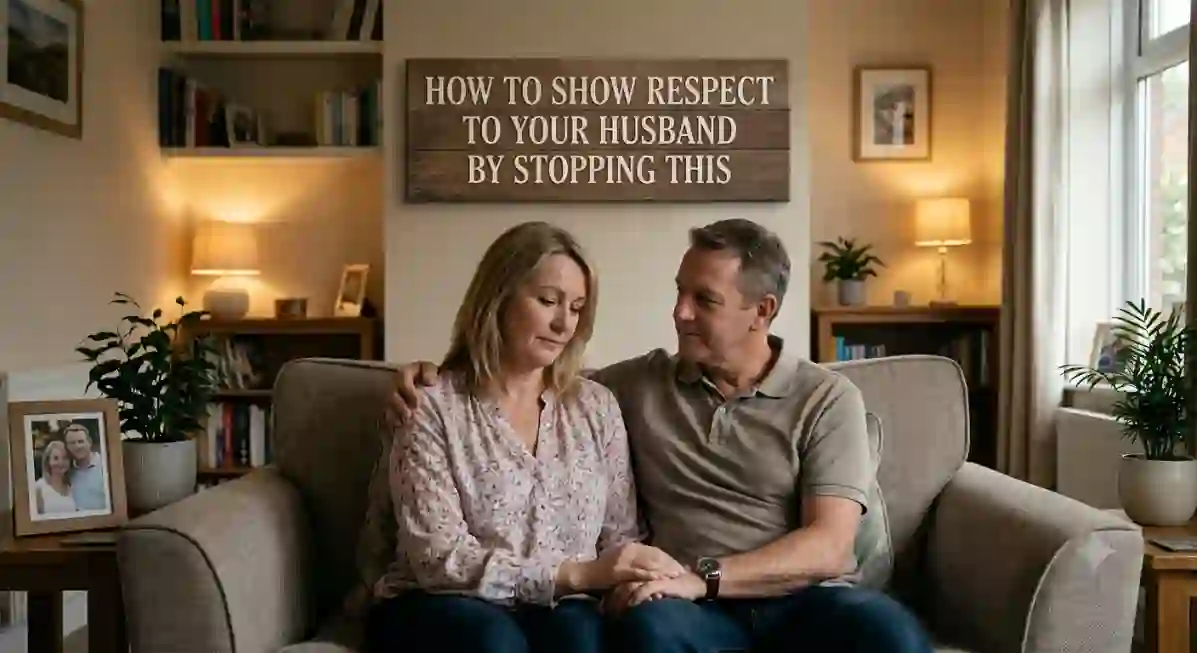
Most of us do not wake up deciding to undermine the men we love. We do it out of care, anxiety, or a desperate need for efficiency in our busy lives. We step in, we fix, we organize, and we manage.
But over time, this well-intentioned helpfulness morphs into management. You start to feel exhausted from carrying the mental load, while he starts to feel like he is failing a test he never signed up for.
I realized my desire to control our environment was quietly destroying his emotional safety in the relationship. To rebuild intimacy, I had to take a hard look at my own behavior and step back.
Here are the nine subtle, everyday habits I completely stopped doing to restore respect in my marriage.
Why Control Feels Like Love (But Translates as Disrespect)
Women often express love through active caretaking and optimization. We see a problem, and our brain immediately maps out a five-step solution to fix it. This stems from an anxious attachment to the relationship’s success.
We think we are being a supportive partner. But to a man, unsolicited intervention does not feel like love. It feels like you do not trust him to handle his own life.
When you constantly step in to manage a man, you rob him of his autonomy. You are signaling that you view him as incompetent, which is the exact opposite of respect.
1. Answering Questions Addressed to Him
We are at a dinner party, and someone asks my husband about his new project at work. Before he even opens his mouth, I jump in to explain it because I know the details and I am excited.
I thought I was being a supportive, involved wife. In reality, I was talking over him and stealing his voice in front of our peers.
Now, I close my mouth and let him speak for himself. Respect means giving him the space to own his narrative, even if he tells the story differently than I would.
2. Redoing His Household Chores
He loaded the dishwasher, but he didn’t do it the “right” way. So, I would quietly follow behind him, rearranging the plates and cups to maximize space.
This creates a massive amount of friction. If you redo his efforts, you teach him that his contribution is never good enough for your standards.
I stopped reorganizing the dishwasher and folding the towels he already folded. Accepting his contribution exactly as it is builds partnership, while micromanaging builds resentment.
3. Offering Unsolicited Advice on His Problems
When he came to me stressed about a situation at work, my immediate reaction was to list off three things he should do to fix it. I was trying to be helpful.
Men often process stress by working through it internally before speaking. When they finally do speak, they usually just want a sounding board, not a manager.
I learned to ask one simple question: “Do you want to vent, or do you want advice?” Respecting his problem-solving process means trusting his capability to figure things out.
4. Venting About His Flaws to My Friends
It is incredibly common for women to gather over coffee and complain about their husbands’ quirks, failures, or annoying habits. I used to participate in this casually, thinking it was harmless venting.
But speaking poorly of him behind his back is a massive breach of loyalty. It shapes how your friends view him and reinforces your own negative focus.
I made a hard rule to stop treating his flaws as public entertainment. Protecting his reputation in public is one of the highest forms of respect you can offer a man.
5. Interrupting His Train of Thought
Because my brain moves a million miles a minute, I used to cut him off mid-sentence when I assumed I knew what he was going to say. I thought we were just bantering.
Interrupting screams, “My thoughts are more valuable than yours.” It shuts down open communication and forces him into a defensive posture.
Now, I practice active silence. I wait two full seconds after he finishes speaking before I respond, ensuring he actually feels heard.
The Bitter Truth You Need to Hear
You cannot demand a strong, capable man while simultaneously treating him like a child who cannot manage his own life. The two are mutually exclusive.
Many women experience cognitive dissonance in marriage. They complain that their husbands do not take the lead, but the moment the man tries, the woman criticizes his methods.
If you want him to step up, you have to be willing to step back and let him do it his way. You have to let him fail, learn, and lead without your safety net.
Respect is not about blind obedience. It is about releasing your grip on the wheel and trusting him enough to let him drive, even if he takes a route you wouldn’t choose.
6. Questioning His Daily Decisions
He would decide to take a different route to the store, and I would immediately ask, “Why are we going this way? The highway is faster.”
Questioning thousands of micro-decisions creates an environment where he feels constantly interrogated. It drains his energy and makes him second-guess himself.
Unless it is a matter of safety or a major life choice, I let the small decisions go. Trusting his judgment on the small things prepares the ground for trusting him on the big things.
7. Treating Him Like a Child Who Needs Reminders
“Did you call the plumber? Don’t forget to call the plumber. Have you called the plumber yet?” I used to act like his personal alarm clock.
This dynamic kills romantic chemistry faster than anything else. A mother-son dynamic replaces a husband-wife dynamic, destroying mutual attraction.
I stopped issuing reminders. If he forgets, he faces the natural consequences of forgetting, but I refuse to be his manager. Breaking the parent-child dynamic changed the entire energy of our home.
8. Using Sarcasm During Arguments
When we argued, I used to weaponize sarcasm. I would roll my eyes, mock his points, or make sharp, passive-aggressive jokes to win the fight.
Relationship psychologists identify this as contempt, and it is the number one predictor of divorce. Sarcasm doesn’t solve problems; it just inflicts emotional wounds.
I eliminated eye-rolling and sarcasm from my conflict vocabulary. Fighting with dignity means addressing the issue without attacking his character.
9. Withholding Appreciation for the Basics
I used to think, “Why should I thank him for mowing the lawn? That is just his job around the house.” I was hoarding my appreciation for grand gestures.
Men thrive on respect and appreciation the way women thrive on affection and security. Starving him of gratitude starves the relationship of warmth.
I started saying thank you for the mundane, everyday things he does. Acknowledging his daily effort makes him want to give even more to the marriage.
Frequently Asked Questions
Does showing respect mean I have to agree with everything he says?
Absolutely not. Respect is about how you disagree, not whether you disagree. You can hold completely opposing views while still speaking to him with dignity and validating his right to his own perspective.
What if he actually drops the ball when I stop reminding him?
He probably will at first. You have trained him to rely on your reminders. Let him drop the ball. He is a capable adult who will learn to build his own systems for remembering things once you stop rescuing him.
How do I stop micromanaging if I have anxiety about things going wrong?
Acknowledge that your control issues are about your anxiety, not his incompetence. Start small. Pick one area—like how he loads the car or handles weekend plans—and completely remove yourself from managing it. Let yourself feel the discomfort without interfering.




Leave a Reply