Your Partner No Longer Loves You 10 Signs Indicating That
- Why love fades without anyone announcing it
- Ten changes that suggest your partner doesn’t love you anymore
- A rough patch or real withdrawal
- Mistakes people make when reading the signs
- Ask the question plainly
- What can you do while you find out?
- Common questions
- Can someone love you and still act distant?
- How long should I wait before deciding if my partner has fallen out of love?
- Can love come back after it fades?
Partner Doesn’t Love You Anymore: 10 Signs and What to Do
Somewhere in the past few months, a small phrase went missing. Your partner used to say “text me when you get home,” and now nobody does. You can’t say which week it stopped, which is how this kind of change usually works.
If your partner doesn’t love you anymore, the evidence usually builds over months: less curiosity about your life, less effort to repair fights, less physical warmth, and a future that stops including you. One sign means little. Several, lasting and unchanged after you’ve raised them, mean a lot.
Why love fades without anyone announcing it
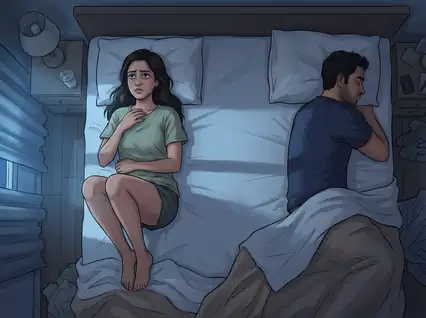
Most people who fall out of love don’t decide to. Their attention drifts first, and behavior follows. Because ending a relationship feels cruel, many keep up a polite version of it long after the feeling has changed. They answer messages, split the bills and say goodnight, while curiosity and effort quietly drain away. Affection tends to leave through the side door, a little at a time, while everyone behaves as if nothing has moved.
The silence has reasons. Some people fear hurting you. Some hope the feeling will come back on its own. Others dread the practical mess of a breakup, with its shared lease, shared friends and shared families, so the message arrives sideways, through what they stop doing.
Researchers who study couples, John Gottman most famously, describe the small attempts partners make to get each other’s attention as bids for connection: a joke across the room, a comment about the day, a hand on a shoulder. A partner who still loves you tends to turn toward those bids. A partner who has emotionally left tends to let them pass. Most of the signs below are a way of measuring that gap.
Ten changes that suggest your partner doesn’t love you anymore
Read these as a cluster. Any single one has an innocent explanation, and the next section covers those.
- They stopped asking about your day, or they ask and drift off before you finish answering.
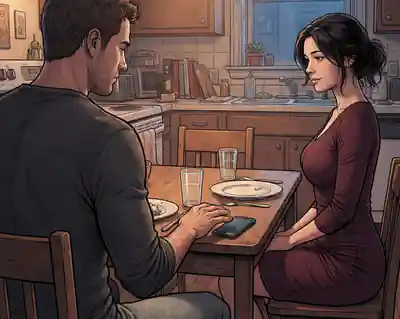
- They no longer fight with you either. Complaints that used to start an argument now get a shrug, because arguing takes caring how it turns out.
- Affection has dropped across the board, including the small touches like a hand on your back, not only sex.
- Plans have lost the word “we.” Weekends, holidays and even a possible job move get discussed as if you were a side note.
- Your good news gets a nod and a change of subject.
- They guard their time away from you and seem lighter when you’re out of the room.
- Irritation now carries an edge of contempt: eye-rolling, mockery, sarcasm about things you care about. Couples researchers treat contempt as one of the more damaging habits a relationship can have.
- Courtesies that used to be automatic, like remembering a birthday or checking in after a hard day, now need reminders or never happen.
- They describe the relationship in flat, tired terms such as “we’re fine” or “it is what it is,” or they talk about your history together in the past tense.
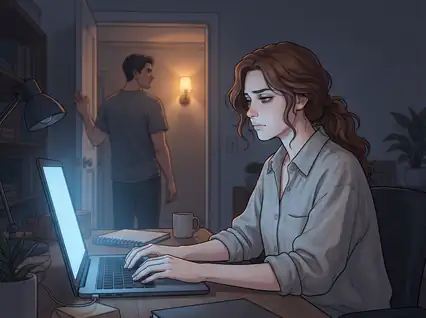
- You feel lonelier inside the relationship than you would on your own, and it has been that way for a while.
Notice how many of these are subtractions: questions no longer asked, plans no longer made, touches no longer offered. Absence is hard to point to in an argument, which is why it’s so easy to dismiss and so easy to doubt yourself about.
A rough patch or real withdrawal
Almost every sign above also shows up in people who love their partner deeply. Heavy stress, burnout, grief, depression, a new baby or a sick parent can make someone short-tempered, tired and absent, and none of that says anything about their feelings for you. Treat the signs as a reason to look closer, never as a verdict.
Four checks help tell the two situations apart. The first is scope. A depleted person usually pulls back from everyone, including friends, hobbies and work, while a partner who doesn’t love you anymore often stays lively and engaged everywhere else. The second is timeline. A rough patch has a cause, and warmth tends to return, slowly at times, once the cause eases. Distance that continues two or three months after the pressure lifts is a different pattern.
The third check is how they react when you say you feel alone. A loving but overwhelmed partner is usually troubled by it. A checked-out partner more often looks irritated or flat. The fourth is repair: do they try to fix things, even clumsily? Effort that is awkward still counts as effort.
If you suspect low mood or depression behind the withdrawal, say so kindly and encourage them to talk to a doctor or counselor. Pulling away from everything can be a health matter before it is a love matter.
Mistakes people make when reading the signs
Once a doubt takes hold, it starts collecting evidence. A late reply becomes proof, a tired sigh becomes contempt, and a calm evening becomes distance. If you’re already convinced your partner doesn’t love you anymore, ordinary behavior gets read through that conviction, and the reading is rarely fair.
A second misreading is confusing less intensity with less love. Early romance runs on novelty and adrenaline. Years later, love usually looks calmer: shared routines, quiet jokes, one person making the other’s tea without being asked. A relationship can lose its fireworks and still be sound. The better test is whether care is still moving in both directions, which shows up in effort and curiosity.
Generosity can mislead too. A partner who feels guilty about pulling away sometimes becomes suddenly attentive, with flowers, a planned weekend and extra patience. That can be real renewal. It can also be guilt wearing a kind face. Watch whether the warmth lasts after the guilt has had time to fade, and whether it includes real interest in you, not only gifts.
Ask the question plainly
Guessing from behavior has a limit. At some point the kinder thing, for both of you, is to ask. Choose a calm hour, away from an argument and away from other people, and open with what you’ve noticed instead of a charge.
Something like: “Things between us have felt different for a few months. I’m not trying to corner you. I’d rather hear something hard and true than keep guessing. Where are you with us?”
For a partner who tends to shut down under pressure, add a pause: “You don’t have to answer tonight. Think about it and tell me by the weekend.”
What comes back usually falls into one of three kinds. A partner who is still invested tends to name specifics, even uncomfortable ones, and looks uneasy about hurting you. A partner who has checked out tends to answer in generalities like “I’m just tired” or “you’re overthinking,” and wants the conversation to end. The third group says “I don’t know,” which is sometimes honest confusion and sometimes a way of not choosing.
An “I don’t know” that stays the same for weeks starts to work as an answer.
What can you do while you find out?
Once you’ve asked, give the answer time to prove itself. A reasonable window is a few weeks of watching what changes, not what gets promised. Words come cheap in a tense week, and effort that lasts is harder to fake.
During that window, resist the urge to audition. Planning better dates, staying agreeable and never complaining usually puts you in a chasing position, and chasing tends to push a withdrawn partner further off while wearing you down. Keep your own routines, your friends and the things that were yours before the relationship. That keeps you steady whatever you learn.
Talk to someone outside the relationship, such as a close friend who keeps a confidence or a counselor. A counselor can also help the two of you if both want to stay, though it only works when both people are willing to be in the room.
A simple decision rule helps. If the distance is still there after the stress has lifted, after you’ve asked directly, and after a few weeks of genuine effort from your side, you’re no longer dealing with a rough patch. Both choices then have a price. Staying costs time, and some self-respect if you’re the only one trying. Leaving costs the future you planned and the comfort of the familiar. Neither is free, and neither is wrong by default.
If it turns out your partner doesn’t love you anymore, the pain is real, and so is the relief of no longer guessing. This advice assumes both of you are free to leave and neither of you is afraid of the other. If fear is part of the picture, talk to someone you trust or a local support service before you raise anything.
Common questions
Can someone love you and still act distant?
Yes, someone can love you and still act distant, especially under heavy stress, grief, burnout or depression. The usual difference is scope and response: a loving but depleted partner is withdrawn with most people, and tends to look troubled when you tell them you feel alone.
How long should I wait before deciding if my partner has fallen out of love?
Give it roughly two or three months of observation after you’ve raised the issue directly, and longer if a clear stressor is still present. The purpose of waiting is to see whether anything changes once your partner knows it matters to you.
Can love come back after it fades?
Sometimes it can, but only when both people want it and something concrete changes, such as time together, honest repair and often help from a counselor. One person cannot produce it alone, and nobody can promise it in advance.