How to deal with breaking up with someone you love
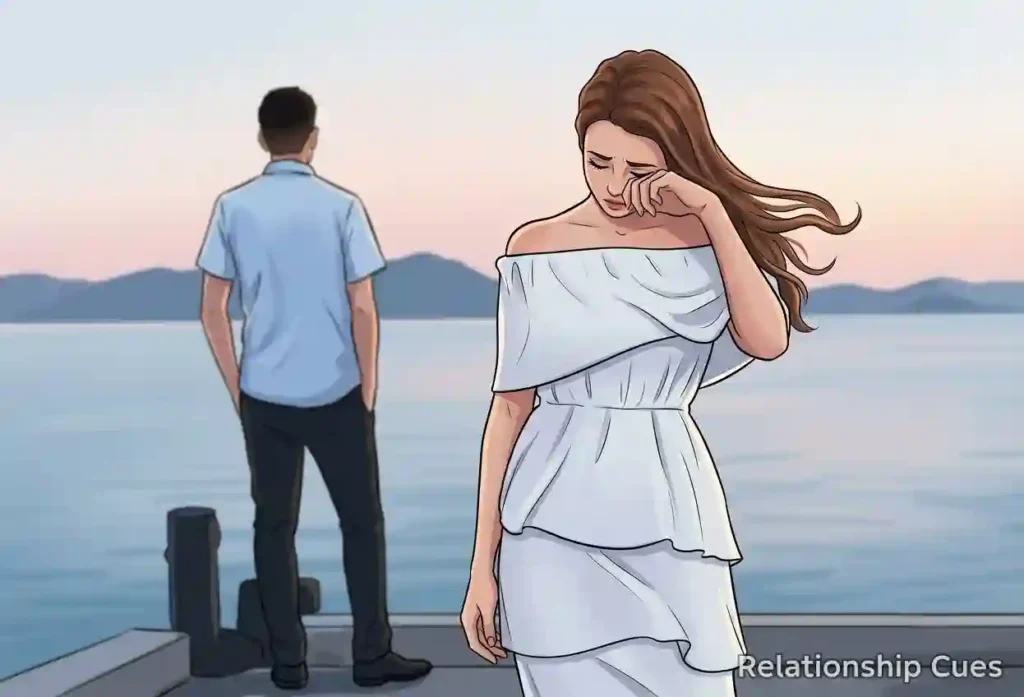
- Why breaking up with someone you love feels like a contradiction
- The first few days call for a smaller job
- Decide what contact looks like before the urge decides for you
- “Maybe I made a mistake”
- How long until it stops hurting this much?
- When the urge to reach out hits
- Frequently Asked Questions
- Can you stay friends with someone you broke up with but still love?
- Is it normal to feel relieved and heartbroken at the same time?
- Should I tell them I still love them when I end it?
Breaking Up With Someone You Love: How to Get Through It
There is a phone charger in your bag that belongs to them, and you keep finding reasons not to return it. That small stalling makes sense.
Breaking up with someone you love hurts because the feeling doesn’t switch off when the relationship does. You get through it by letting the grief be real, cutting off the contact that keeps reopening it, staying close to people who knew you before them, and checking your decision against your reasons whenever the missing gets loud.

Why breaking up with someone you love feels like a contradiction
Most people absorb an idea early on that love is the reason to stay and the lack of it is the reason to go. So when you end things while still caring deeply, your mind goes looking for the mistake. It assumes one of the two feelings has to be fake.
Neither one is fake. Psychologists call the pull of two opposite feelings at once ambivalence, and it is common at the end of relationships that were good in places and wrong in others. Love is a feeling about a person. A relationship is a daily arrangement of timing, values, money, habits and needs, and a feeling on its own can’t hold all of that up.
The bond itself also takes longer to loosen than the decision does. Attachment, built from thousands of ordinary days, doesn’t read your announcement. It keeps reaching for the person at the usual hours, the way a hand finds the light switch in a house you moved out of years ago.
One small task helps early. Take a single page and write your reasons for ending it in plain sentences, the kind you would say aloud to a friend: “We want different things about kids.” “I stopped feeling safe saying what I need.” Date it. On the days when love is loud, that page is the clear-headed version of you, still speaking.
The first few days call for a smaller job
In the first days after ending things, the goal is small: eat something, sleep when sleep comes, and reach the end of each day. Grief uses real energy, which is why people feel flattened and oddly forgetful, and why a to-do list that looked ordinary last week now looks enormous.
Tell two people the plain fact early. Skip the whole story and say something like, “I ended it, and I’m having a hard time.” Then hand each of them a small job, such as a call at lunch or a walk on Saturday. Friends often hold back because they don’t know what to offer, and a specific job removes the guessing.
If you shared a home, the rooms still hold both of you, so a few nights at a friend’s or a relative’s place can give you a break from the reminders. If you can’t leave, put their things in a box and move the box out of sight. A box can be opened later, while a dramatic purge can’t be undone, and people rarely regret the first.
Mute their accounts instead of deleting everything, if deletion feels like too much. The goal is simply that you don’t meet them by accident on a bad day.
Decide what contact looks like before the urge decides for you
The strongest pull after a breakup usually arrives as “one last message.” It feels like closure, but what tends to happen is the reverse: each reply, even a kind one, ends the pause and starts the grief again from a higher point. A rule chosen on a calm afternoon beats a decision made in the middle of a wave. For breaking up with someone you love, that usually means a stretch of no contact, long enough for the daily pull to weaken.
If a clean break is possible, say it once, kindly, and then keep it. Something like: “I care about you, and I need real distance to heal. I’m not going to be in touch for a while. I hope you’re looking after yourself.” After that, you can leave their replies unanswered without being cruel. The cost is real: it can feel cold, and you may lose a friendship you valued. Staying in touch has a cost too, since every exchange reopens the wound before it has closed. Neither choice is free, so pick the one whose cost you can carry.
Raising children together, a shared lease, the same workplace or a family group chat can make no contact impossible. The usual advice breaks down here, so shrink the contact instead of ending it: one channel, one topic, and set times to check it. In the group chat, mute it and answer only what needs an answer. Leaving with a flourish tends to start a second conversation about the leaving.
One test works in either situation. If hearing from them leaves you flattened for a day or more, the contact is costing more than it gives, and the rules need tightening.
“Maybe I made a mistake”
This thought tends to arrive somewhere in the second or third week, often right after a good day, and it feels like fresh information. Usually it isn’t. It is more often the mind trying to end the pain by undoing the cause.
Missing someone tells you what you lost. It can’t tell you whether keeping it was possible.
Part of the reason is rosy retrospection, the habit of memory to keep the warm highlights and let the friction fade. A month out, the trip and the private jokes come back easily, while the third argument about the same subject has gone blurry. Add loneliness, and the past starts to look like a better deal than it was.
A decision rule helps here. Take out your one page and ask whether any reason on it has changed, or only how much you hurt. If the reasons still stand, the doubt is grief looking for a way back, and it can be allowed to pass. If something real has changed, such as a circumstance, or a pattern that has shifted over months instead of being promised in one hard night, the question deserves a slower and more honest look, once the waves have settled.
How long until it stops hurting this much?
There is no fixed schedule for getting over someone you still love, and anyone who gives you an exact number is guessing. The pattern usually runs like this: the first week or two bring shock and a strange flatness, broken by sharp waves. After that the waves keep coming with more space between them, and they tend to be set off by small things, like a mutual friend’s photo or a wedding invitation with only one name on it.
Healing rarely moves in a straight line. A good week followed by a rough day is the usual shape of it, and it says nothing about whether you are starting over. Grief files itself with context, so places, dates and routines can call it back long after the main feeling has softened.
That makes the known hard days easy to plan for: the date you got together, their birthday, the holiday you always spent together. Put a person, a trip or a long project on those dates ahead of time. Over the following months, thoughts of the other person tend to turn into occasional visits instead of daily weather.
When the urge to reach out hits
Urges tend to rise, peak and drop, much like a wave, and what you do during the rise matters more than any big resolution made on a calm day. Any one of these gives the wave time to pass:
- Write the whole message, every word of it, and leave it unsent in a notes file.
- Reread your one page of reasons, slowly, from top to bottom.
- Call or text someone who will answer, and tell them you’re in a wave.
- Move for ten minutes, even if it is only a lap around the block.
If weeks go by and sleep, eating or work keep falling apart, talk to a doctor or a counselor, because heavy grief is something professionals help with every day. If you ever have thoughts of harming yourself, reach out to someone near you or a local crisis line the same day.
All of this assumes both people are free to leave. If the relationship involved fear, control or threats, your safety comes before any of the steps above, and a trusted person or a local support service can help you plan how to leave and how to stay out of reach.
Breaking up with someone you love means grieving a person who is still out there living their life, which is a strange and slow kind of loss. Today, one task is enough: write the page of reasons, date it, and put it somewhere you can find it. The charger can wait.
Frequently Asked Questions
Can you stay friends with someone you broke up with but still love?
Sometimes, but rarely right away. While love is still active, friendship usually means managing your feelings in front of them, which reopens the wound. Most people do better with a long pause first. If friendship matters later, it tends to start once seeing their name stops costing you a day.
Is it normal to feel relieved and heartbroken at the same time?
Yes, it is very common. Relief responds to the problem ending, while grief responds to losing the person from your daily life, and the two can arrive in the same hour. Neither feeling cancels the other, and neither one proves the decision wrong.
Should I tell them I still love them when I end it?
You can, if it is true, but it works best when the decision stays clearly final. Telling someone you still care can be kind. Telling them you still love them, with no firm line after it, often gets heard as an opening to negotiate. Say it once, say the decision is made, and stop there.