Grieving Differently As A Couple: Why It Creates Distance
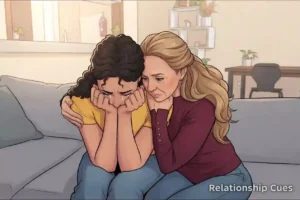
The funeral was over. The relatives had gone home. The house was quiet. You sat on the sofa and cried. Your partner, in the next room, was cleaning the kitchen with a tight face.
You felt hurt. Why is he not crying? Why does he act as if nothing happened? Does he even care?
He cared deeply. He was grieving, in a way you did not recognize.
Two Ways Of Grieving
Grief researchers describe different styles. In intuitive grieving, a person feels the pain strongly, cries, talks and seeks to share it. In instrumental grieving, a person copes through action: tasks, planning, problem-solving, keeping busy.
Neither is right or wrong. Most people mix both, but each of us leans one way. When partners lean in opposite directions, the gap can feel enormous.
How The Gap Gets Misread
- The person who cries may think, “He does not care.”
- The person who stays busy may think, “She is stuck, and I cannot fix it.”
- One wants to talk about the loss. The other wants to avoid it.
- One recovers faster, and is pushed to “move on.” The other needs more time and feels rushed.
Each person starts to feel judged by the other, at a time when they most need understanding.
A Real Example
Yashika and Manav lost his mother. Yashika wanted to look at old photos and talk about her. Manav handled the paperwork and avoided the subject.
Yashika: “Do you not miss her?”
Manav: “Of course I do. But what is the use of crying? There is a lot to do.”
Yashika: “I feel like I am grieving alone.”
Manav: “I do not know how to do it the way you do.”
It was a painful moment, and also an honest one. Neither was wrong. They were simply carrying the same loss in two different ways.
Pawan’s Core Truth: You cannot grieve for each other. But you can sit near each other while each grieves in their own way.
The Uncomfortable Truth
Grief can bring out the worst in people, and also the most vulnerable. Often, anger meant for the loss lands on the nearest person. You may snap at your partner because they are alive and present, and the person you lost is not.
Also, grief rarely follows a schedule. One partner may feel better after a few weeks, while the other has waves for years. Pushing someone to be “over it” does not speed up their healing. It only makes them hide it.
And sometimes the person who seems “fine” is the one carrying a silent weight, afraid that if they cry, there will be nobody to hold the family together.
How To Reach Each Other
1. Name your styles. Say it plainly: “I seem to grieve by talking and crying. You seem to cope by doing things. Both are okay.” Naming it removes some of the judgment.
2. Say what you need. “I need you to sit with me for ten minutes.” “I need some time to work on something.” Clear needs prevent guessing.
3. Create a shared ritual. Light a candle on a certain day, cook a favorite dish, visit a place, look at photos together. A small ritual gives you a way to remember side by side.
4. Use a check-in phrase. “How are you holding up today?” Make it a daily question, and accept any answer without trying to fix it.
5. Do not use a timeline. Avoid saying “It has been months.” There is no correct date for feeling better.
6. Give each other space and company. Some moments call for being together. Others call for being alone. Ask which one is needed.
7. Take care of the body. Sleep, meals and gentle movement matter more than usual. Grief is exhausting.
8. Prepare for hard dates. Birthdays, anniversaries and festivals may bring waves. Talk about them ahead of time.
9. Seek outside support. A grief group, a counselor or a trusted friend can offer a place to speak without worrying about each other’s reactions.
When The Relationship Itself Is Strained
Major losses, such as the death of a child or a pregnancy loss, put enormous stress on couples. It is common to feel distant, angry or even to blame each other. If the distance grows, or one or both of you feel unable to cope, professional help can make a big difference.
If grief becomes overwhelming, with long periods of numbness, hopelessness or thoughts of not wanting to continue, please speak to a doctor or counselor soon. You deserve care.
What Can Grow
Many couples say that, over time, they became closer because of what they went through. Not because the pain was good, but because they learned to be gentle, patient and honest with each other. They learned that love does not require the same way of grieving. It requires staying.
Pawan’s Core Truth: Different grief is not a sign of different love. It is a sign that two people are carrying the same weight in two different hands.




Leave a Reply