Overthinking Texts From Someone You Like: Why It Happens
He wrote, “haha okay.”
Not “haha okay!” Not “haha okay 😄.” Just “haha okay.”
Two hours later, you have shown the screenshot to three friends, reread the whole chat from the start and decided he is losing interest. He is probably eating lunch.
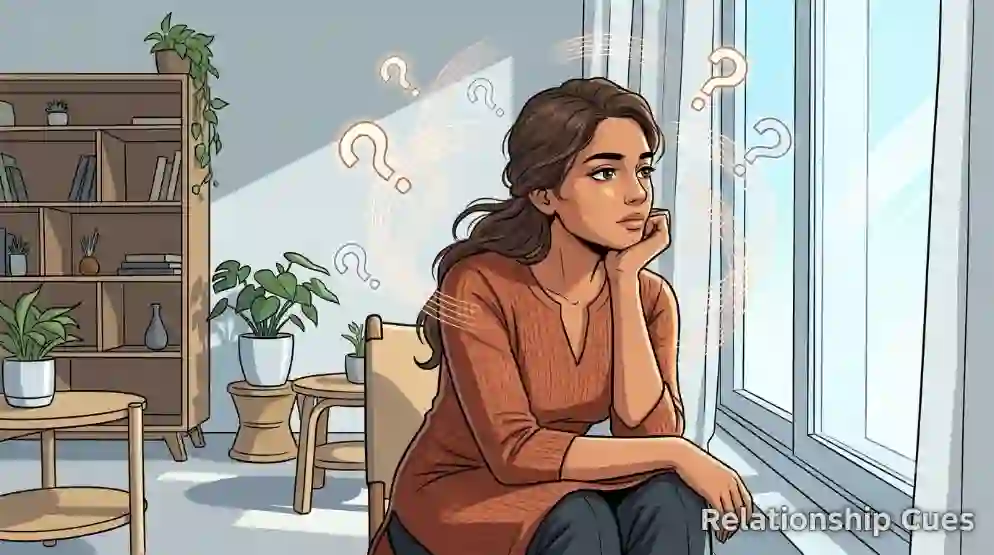
Your Brain Hates A Gap
A short message leaves empty space. Your mind does not like empty space, so it fills it. This is called intolerance of uncertainty. People with this trait find “I don’t know” so uncomfortable that they would rather believe a bad answer than wait for a real one.
The text is tiny. But what is behind it feels huge: Does he like me? Will I be rejected? The size of that fear makes small details feel important.
Tiny Cues, Big Stories
Two mental habits do most of the damage:
- Mind reading. You decide you know what he is thinking from a single word or a missing emoji.
- The spotlight effect. You assume every small thing you say or he says is being carefully watched and judged.
Kavya got a one-word reply, “Sure.” She spent the evening building a story.
Kavya: “He used to write full sentences. Now just ‘Sure.’ He’s bored of me.”
Her friend: “Did you ask him anything big?”
Kavya: “I asked if he wanted to meet Saturday.”
Her friend: “And he said sure. That’s a yes.”
The answer was a yes. Kavya had spent three hours arguing with a message that already gave her what she wanted.
Why Checking Makes It Worse
Every time you check your phone, there is a chance of a reward, a new message. That is the same pattern that keeps people scrolling. Each check gives a flash of relief, and that relief teaches your brain to check more.
So overthinking does not calm anxiety. It feeds it.
Pawan’s Core Truth: You cannot think your way to certainty about another person’s mind. You can only wait, watch what they do and decide what you want.
The Uncomfortable Truth
You are not really analyzing the text. You are rehearsing rejection so it will hurt less when it comes.
It never works. You feel the pain in advance, and then you feel it again if it really happens. You also hand someone who barely knows you a lot of control over your afternoon.
The overthinking feels like protection. It is actually a quiet way of suffering twice.
What To Do Instead
1. Split evidence from story. Take a note on your phone. Left side: what actually happened (“he replied in 20 minutes with two words”). Right side: what you are imagining (“he is losing interest”). Look at how much is on the right.
2. Write three harmless explanations. At work. In a meeting. Low battery. When you see how many plain reasons exist, the dramatic one loses its weight.
3. Add a delay. After you send a message, put the phone out of reach for 30 minutes. Start with 30. Increase it each week.
4. Move clarity into real life. Texts are a poor way to read a person. Suggest a plan. How he responds in action tells you more than ten messages.
5. Fill the hours. A full day leaves less room for a single message to run your mood.
A Quick Reply Test
Before you reply to a message that sends you into a spiral, ask yourself three questions.
- What is the simplest meaning of these words?
- If a friend sent me this exact message, would I think anything of it?
- Is there any new evidence here, or is it the same worry in a new outfit?
Most of the time the answers are boring. That is the point. Boring answers take the drama out of the moment.
Kavya tried this with “Sure.” The simplest meaning was yes. A friend sending it would have meant nothing. The new evidence was none at all. She replied with a simple “Great, see you Saturday,” and put her phone down. The date went well. The three hours she had lost earlier were the only real cost of the whole thing.
Learning To Enjoy The Not-Knowing
The best dating mindset is curiosity. Instead of asking “Does he like me?” ask “Do I like him, and how does he treat me over time?” That small switch moves you from waiting for a verdict to watching an experience unfold.
You still care. You just stop handing your peace to a stranger’s reply speed. Over time, uncertainty feels less like a threat and more like the normal start of getting to know someone.
When It Is Bigger Than Texting
If you do this with every person, every message and every silence, it may be a wider anxiety habit and not just a dating habit. A counselor can teach you tools that work well for it.
The goal is not to stop caring. It is to like someone without letting every small pause turn into a verdict.


Leave a Reply