Repeating Your Parents’ Relationship Patterns In Love
You hear your own voice in the middle of an argument, and for a moment it sounds exactly like your father’s. Or you go silent the way your mother did, and you realize you are doing the very thing that hurt you as a child.
You promised yourself you would never be like them. And yet, here you are.
This is not a failure of character. It is how learning works.
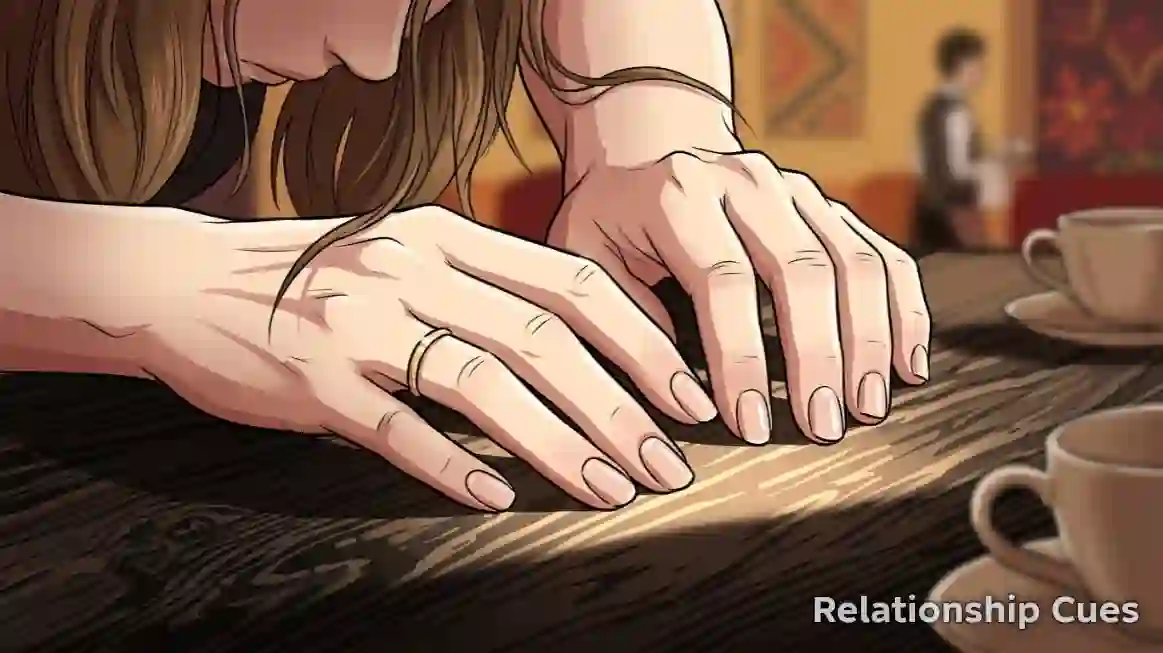
You Learned Love By Watching It
Long before you had your first relationship, you watched two people share a home. You saw how they handled anger, how they showed affection, who gave in and who stayed silent. Without anyone teaching you, your mind took notes.
Psychologists describe this as modeling. You internalized a relational template: a set of unspoken rules about how couples behave. It feels like “just how relationships are,” because it was the only version you saw for many years.
How The Copy Gets Made
- If conflict meant shouting, you may shout or fear anyone who raises their voice.
- If conflict meant silence, you may withdraw without noticing.
- If love meant sacrifice, you may over-give and expect nothing back.
- If one parent dominated, you may choose to dominate, or to be dominated.
- If affection was rare, you may feel uneasy when a partner is openly warm.
The patterns can also appear in reverse. A child of a controlling parent may end up with a very passive partner, or become controlling themselves. Opposites and copies both come from the same source.
A Case To Reflect On
Kritika grew up in a home where her father shouted and her mother said nothing. As an adult, she promised never to be silent in a relationship. Her partner, however, was quiet by nature.
Kritika: “Say something! Why do you never talk?”
Partner: “I am thinking.”
Kritika: “You are shutting me out, just like…”
She stopped. She had been about to say “just like my mother.” She realized she was now acting out her father’s role, raising her voice to force a response.
She had fought so hard not to be her mother that she had become her father.
Pawan’s Core Truth: You do not have to copy your parents to be controlled by them. Doing the opposite on purpose is also following their script.
The Uncomfortable Truth
Swearing you will never be like them keeps them in charge. Your energy is still organized around their behavior, even if the direction is reversed.
Real change is not about being the opposite. It is about being yourself, with your own choices. And that requires a different kind of work: understanding the rules you were handed, deciding which ones you want and putting the others down.
It is also worth noticing the good things you inherited. Many people have parents who showed loyalty, humor or steady effort. Not everything in the template needs to be thrown out.
How To Rewrite The Pattern
1. Map the family rules. Write down answers to simple questions. What happened in your home when someone was angry? How was love shown? Who made the decisions? Who apologized? You will start to see the outlines of the template.
2. Spot your triggers. Notice when you react more strongly than the situation calls for. A strong reaction often points to an old memory.
3. Choose one behavior to change. Not everything at once. Pick one habit, such as raising your voice or going silent, and practice an alternative. Take a breath, name the feeling or ask for a pause.
4. Tell your partner. “I noticed I do this when I get scared, and it comes from my childhood. I am working on it.” This turns a hidden pattern into a shared project.
5. Grieve what you did not get. Part of breaking the pattern is accepting that some things you needed were not given. Sadness here is not weakness. It is what makes room for something different.
Stories That Get Passed On Without Words
Some patterns are not about behavior but about beliefs. A child who watched a parent sacrifice everything may grow up believing that love requires suffering. A child who saw money used to control may link affection with power.
Ask yourself: what beliefs about love did I absorb? “Love means putting up with a lot.” “People who care leave in the end.” “Strong people do not ask for help.” Each of these is a sentence you can look at and decide whether it is still true.
Often, once a belief is spoken aloud, it loses some of its grip. It becomes just one idea among many, and not an unquestioned law.
Share one of these with a trusted friend or your partner. You may find they have their own. Talking about it can turn a lonely struggle into a shared project of building something new.
When To Seek Help
Deep patterns can be hard to see from the inside. A therapist, especially one trained in family patterns or attachment, can help you recognize them and practice new responses in a safe place.
The aim is not to blame your parents. Most did what they knew, with the tools they had. The aim is to make sure that what you pass on, to your partner and to anyone who comes after you, is something you chose.




Leave a Reply