Why Saying Sorry Does Not Stop The Same Fight
Same fight, new day.
You say sorry. He says sorry. You hug and watch a show together. Eleven days later, the same argument comes back, almost word for word.
You start to wonder whether the two of you are broken. You are not. You are likely using the wrong tool.
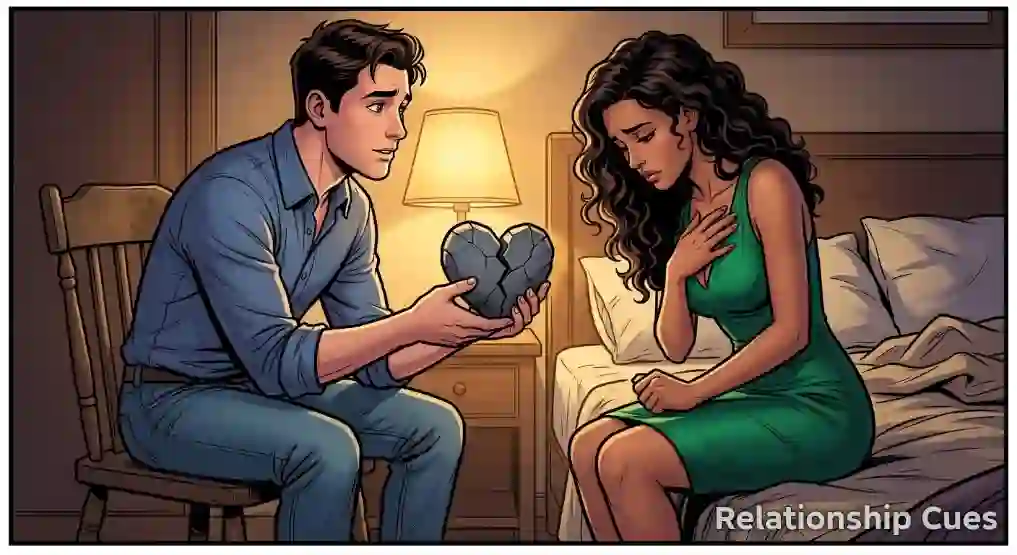
Sorry Ends The Fight But Not The Problem
Research on couples has found that most of their conflicts are not about one-time mistakes. They are about lasting differences in needs, habits or values. Psychologists call these perpetual problems.
A quick “sorry” can calm the moment. But if it never touches the real issue, it is only a pause. You are not solving the problem. You are agreeing to stop talking about it.
Three Kinds Of Sorry
- The fire-extinguisher sorry. “I’m sorry, okay? Can we drop it?” It is meant to end discomfort, not to understand anything.
- The defensive sorry. “I’m sorry you feel that way.” It sounds polite but hands the problem back to the other person.
- The repair sorry. It names the act, names the effect and promises one real change.
Most couples use the first two. Only the third actually calms a recurring fight.
What The Fight Is Really About
Aman came home 40 minutes late without a message.
Neha: “You said seven. It’s almost eight.”
Aman: “I’m sorry, okay? Traffic was bad. Can we drop it?”
Neha: “You said that last time.”
She was not upset about 40 minutes. She was upset because, to her, being left waiting without a word meant she was not a priority. That is an unmet emotional need, and it sits underneath the fight. Aman answered the clock. Neha was asking about her place in his life.
Pawan’s Core Truth: The fight on the surface is rarely the fight that matters. Fix the need underneath, and the surface fight loses its fuel.
The Uncomfortable Truth
Often, one partner uses “sorry” to get out of the room, not to get into the problem.
It is not really an apology. It is a way to stop feeling uncomfortable. And the other person can feel that difference immediately. They hear the words, but they do not feel any change in you, so they keep the old pain and wait for the next round.
If you are the one saying sorry fast, ask yourself: am I sorry for what I did, or am I sorry that this conversation is hard?
A Repair That Actually Works
1. Name what you did. “I came home late and did not tell you.” Be specific. Vague apologies sound empty.
2. Name how it landed. “I think you felt like your time did not matter to me.” You do not need to be perfect. You need to be close.
3. Ask what they needed. “What would have helped you in that moment?” Then listen without defending yourself.
4. Offer one concrete change. “If I am going to be more than 10 minutes late, I will text you.” One clear promise beats five general ones.
5. Follow through the next time. This is the step that makes the apology real. Trust is rebuilt by repeated small actions, not one good speech.
A Full Example Of A Repair Talk
Here is how Aman and Neha could have handled the same night.
Aman: “I came home late and did not text you. I think you felt like I did not care about your time.”
Neha: “Yes. I sat here thinking something happened to you.”
Aman: “That must have been worrying. What would have helped?”
Neha: “Just a message. Even two words.”
Aman: “Okay. If I am more than 10 minutes late, I will text. Can I ask you for something as well? When you are upset, can you tell me early, so it does not build up?”
Neha: “Yes. I can try.”
It takes about two minutes. The tone is calm because nobody is trying to win. Both people leave with something clear to do. That clarity is what stops the fight from returning, much more than any hug alone.
The Fights Worth Having
Not every disagreement needs to disappear. Some differences will stay for life, like how neat the house should be or how much time to spend with relatives. A strong couple is not one with no conflict. It is one that can talk about the same topic again without it turning into a war.
Aim for a fight that ends with a little more understanding than it started with. If you reach that, even the old arguments become a way of knowing each other better.
If You Are The One Receiving The Apology
You have a role too. If your partner makes a real effort at repair, do not use it as a weapon. Skip lines like “see, you admitted it” or “say it again.”
When the apology is rewarded with kindness, people try again. When it is punished, they go back to the quick sorry that costs them nothing.
The aim of a fight is not to end up with a winner. It is to end up knowing each other a little better than you did before it started.




Leave a Reply